
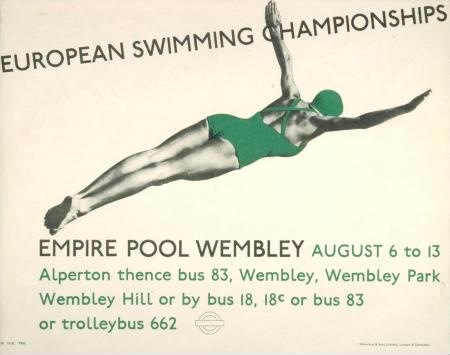
Family swim
Today my swimming pupils were a father and his six year old son. The Dad was more or less a beginner, the son could only swim a couple of metres unaided, but he was full of underwater tricks and turns, like a little tadpole.
The little boy was a stern critic of his Dad’s swimming. His highest praise for his Dad’s glide was ‘quite good’ but his attempt at a longer swim using just a leg kick was ‘very bad’. He said ‘My Dad is letting his toes drag on the ground and his legs are all bent.’ I could see his point. My younger pupil was however a keen demonstrator of amongst other things, the mushroom float, which we then persuaded the Dad to try. Teacher’s verdict  ‘Head not tucked in enough’.
It was the father who suggested the joint lesson and afterwards his wife told me that she had not thought it would work. In fact it was lovely. I think it was a fantastic idea and they will both learn more than either would if they had separate lessons. The father told me that he works long hours and has to travel quite a bit with his work. It seemed to me like a delightful way for them to spend time together, and what a great feeling for the little boy to be able to help and teach his Dad.
F Scott and Zelda Fitzgerald in their bathing suits
F Scott and Zelda Fitzgerald were keen swimmers and divers. 
Flow – a musical instrument playing the sound of the river Tyne.

Flow is a musical instrument that plays the sound of the river. Click here to watch the documentary about this fascinating project.
The joy of jumping in
Another one of my posts on the Guardian swimming blog.
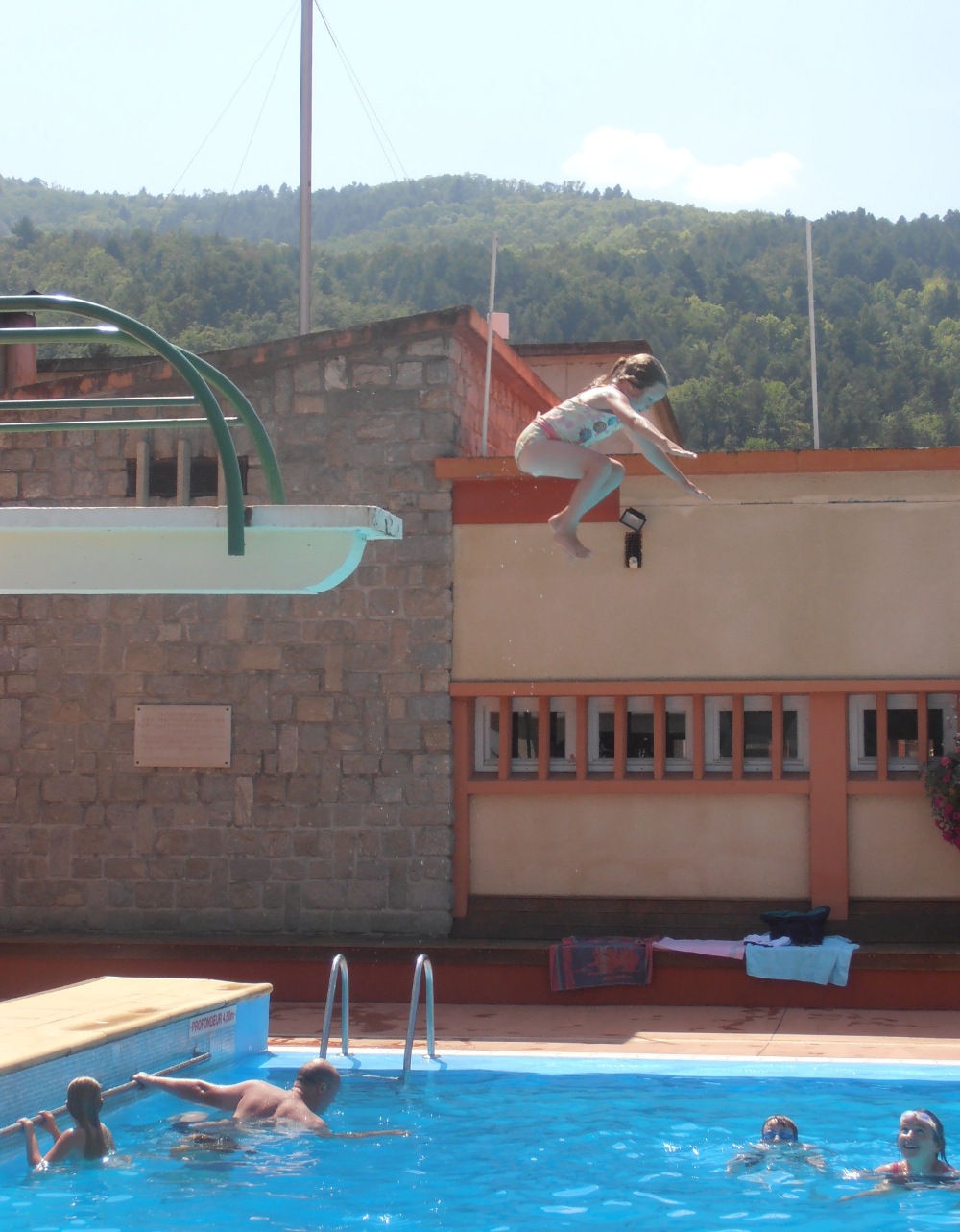
Ivy jumping in
Guardian swimming blog – How to overcome your fear of swimming
I am excited because The Guardian have published my article about fear of the water on their swimming blog. Thank you to my students who gave me permission to use their stories.

Photo by Mark Tipple
Swimming monkeys
Interesting to see that the chimpanzees here swim with their faces both in and out of the water. I find with many people I teach that it is the fear or reluctance to put the face in the water that stops them from swimming efficiently and effectively.
Fifteen whale years
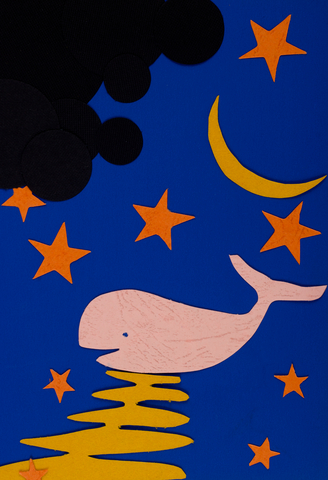 I have just found out that it would take a whale fifteen years to swim from the Earth to the moon, so instead of one point something light seconds away, we could say the moon was fifteen whale years away.
‘A remote place among strangers’
Tennessee Williams
‘For me a convenient place to work is a remote place among strangers where there is good swimming. ‘

Tennesee Williams writing on ‘The Catastrophe of Success’ in the New York Times November 1947
Learning to let go
 ‘People wish to learn to swim and at the same keep one foot on the ground.’
From A la Recherche du Temps Perdu by Marcel Proust 1871 – 1922
In this quotation Proust is talking metaphorically but the more I teach swimming the more I understand that letting go and trusting the water is the most important aspect of learning to swim. However it is probably also the most difficult thing to learn. It is certainly the most difficult thing to teach because it has to come from inside. It takes experience and understanding of the body in the water to be able to allow oneself to float and glide freely. You have to let the water support you, if you try to hold on to the water, even a little bit, it won’t work. And this I have realised is the biggest difference between a swimmer and a non-swimmer. A swimmer knows, instinctively and through practice, how to let the water support them, a non-swimmer doesn’t. Fear makes us try to hold on, and so fear of the water can stop someone being able to swim, even if, as is sometimes the case, they understand the technique perfectly.
 mindful swimming