
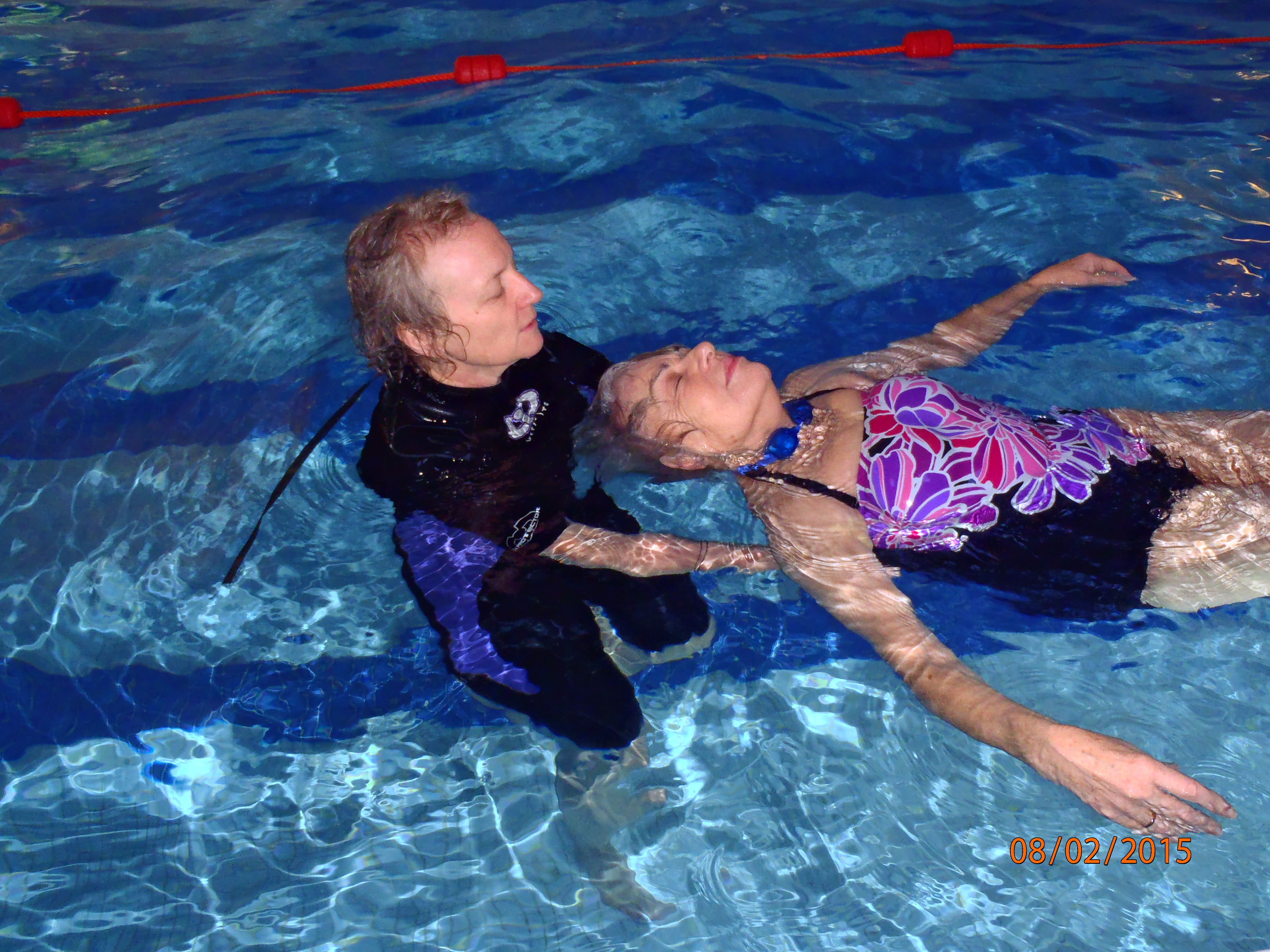
 Me and Mum practising a bit of backstroke. I am impressed by how glamorous she manages to look at all times.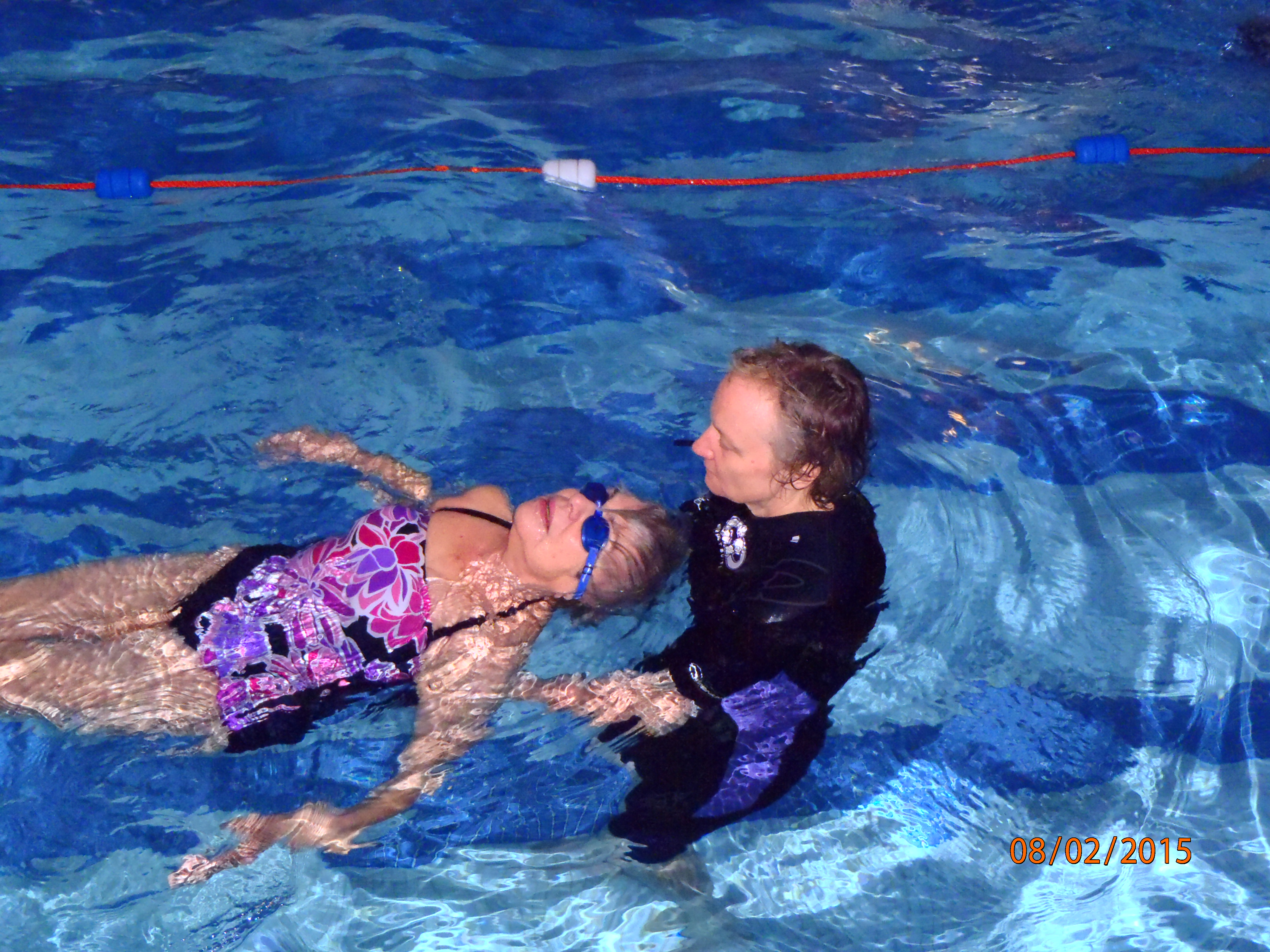
learning to swim
Swim at home
It seems you don’t need a pool to learn how to swim. You can learn at home, as long as you have an ordinary piano stool. Here is some useful advice from 1937.
We could become a nation of non-swimmers
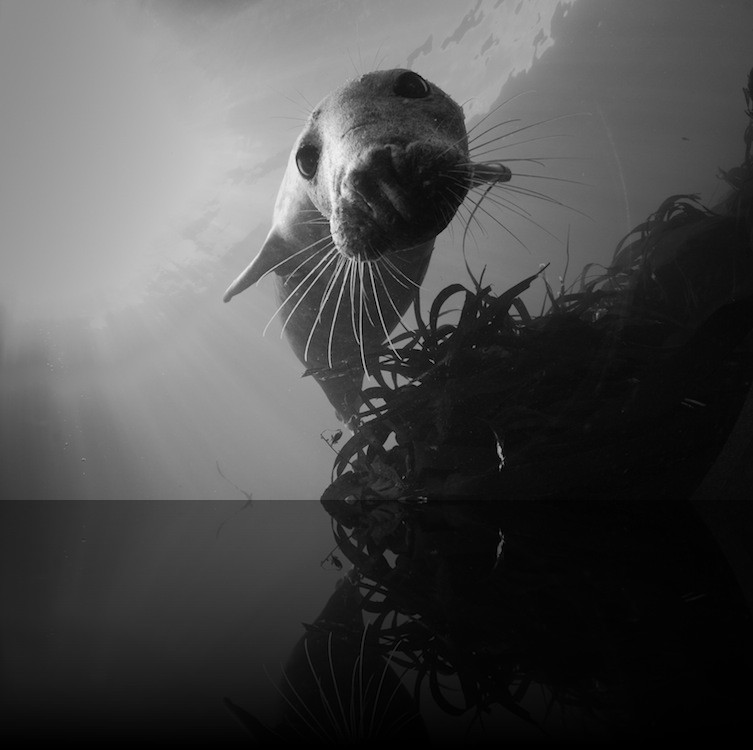
Diving seal, Farne Islands, photo by Farne Island Divers
Britain could become a nation of non-swimmers if action is not taken to dramatically improve school access to facilities and lessons.
The University of East Anglia have published research showing that fifty one per cent of children aged seven to eleven in the UK cannot swim twenty five metres. This is despite the fact that it is a requirement of the national curriculum.
Twenty five metres is not very far to be able to swim. In Sweden for example children are expected to be able to swim 200 metres of which at least fifty metres should be on the back.
The problem is most acute in rural areas where small schools face problems of time and cost of transporting children to pools.
These non-swimming children will grow up to be non-swimming adults who in turn are unlikely to take their own children swimming and so we could indeed become a nation of non-swimmers.
JP and Me
 Me and BBC Radio 4’s JP Devlin about to hit the water. A total and somewhat fearful non-swimmer just a few months ago JP can now swim a length of the pool doing breaststroke and is working on front crawl and backstroke.
He has been a delight to teach and is very brave and determined. He is also always prepared to try out my sometimes slightly odd ideas including jumping in, sitting dives, mushroom floats and spinning round in the water.
Learning through play
 I was a little bit exasperated yesterday when the mother of one of the children I teach said to me
‘When are you going to teach him the strokes?’
I sort of interpreted this as
‘When is he going to be able to swim all four strokes in a flawless fashion?’
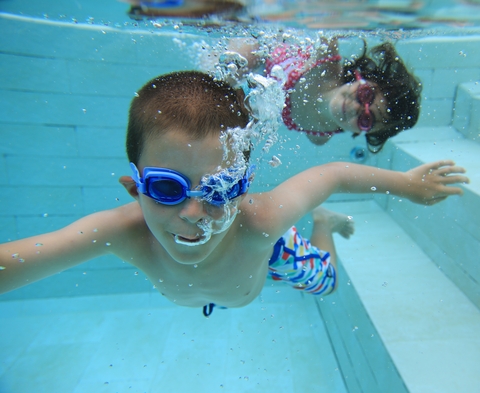
This boy can swim a whole length of the pool on his back and on his front, can float on his back and his front for at least twenty seconds without moving at all, can jump into the pool, do a sitting dive, dive down to pick things off the bottom of the pool, tread water, but perhaps his strokes are not perfect, yet.
This is also a child who after a good start, refused to go into the water at all for a whole year. Instead he just came to watch his brother’s lesson. I knew that something must have happened to make him frightened and eventually he told me that he had gone under the water and felt he couldn’t breathe. This was not in my class. It happened when he was with another teacher. Eventually after watching my class for a few months he asked if he could join in.
When they are frightened of the water the children often say things like, ‘I might sink to the bottom’ or ‘I might drown’ or ‘I won’t be able to breathe’. I am trying to help them develop the skills they need to overcome these fears and manage themselves in the water, without help, and in a way that they feel comfortable with. This is not a matter of just desperately thrashing your way from one end of the pool to the other.
Learning to swim takes a long time, for adults and for children. There are many stages to go through. At first a non swimmer wants to remain upright and has some difficulty with stretching out in the water. Many people, adults as well as children, don’t want to put their faces in the water, but an ability to do this is an absolutely basic requirement for good swimming. Then without experience it is impossible to understand the exact amount of force or pressure it takes to move oneself through the water. Balancing in the water is different from balancing on land, this must be learned too.
In order to learn the strokes properly you need to learn the elements that go into each one. When a child is confident in the water, learning the strokes is easy.
The parents I love best are the ones who allow their children to develop the skills gradually through exploration and play. The irony is that it is the children who are allowed to play who learn the quickest. I see time and time again, when the parents apply pressure, the children have to resist, in order to keep themselves safe and the whole thing takes much, much longer.
The only thing that seems to spoil the experience of learning swim is the pressure to achieve. This can take away all the joy. I want to say to many of my adult pupils, slow down and learn to play in the water, then you will learn to swim.
Family swim
Today my swimming pupils were a father and his six year old son. The Dad was more or less a beginner, the son could only swim a couple of metres unaided, but he was full of underwater tricks and turns, like a little tadpole.
The little boy was a stern critic of his Dad’s swimming. His highest praise for his Dad’s glide was ‘quite good’ but his attempt at a longer swim using just a leg kick was ‘very bad’. He said ‘My Dad is letting his toes drag on the ground and his legs are all bent.’ I could see his point. My younger pupil was however a keen demonstrator of amongst other things, the mushroom float, which we then persuaded the Dad to try. Teacher’s verdict  ‘Head not tucked in enough’.
It was the father who suggested the joint lesson and afterwards his wife told me that she had not thought it would work. In fact it was lovely. I think it was a fantastic idea and they will both learn more than either would if they had separate lessons. The father told me that he works long hours and has to travel quite a bit with his work. It seemed to me like a delightful way for them to spend time together, and what a great feeling for the little boy to be able to help and teach his Dad.
The joy of jumping in
Another one of my posts on the Guardian swimming blog.
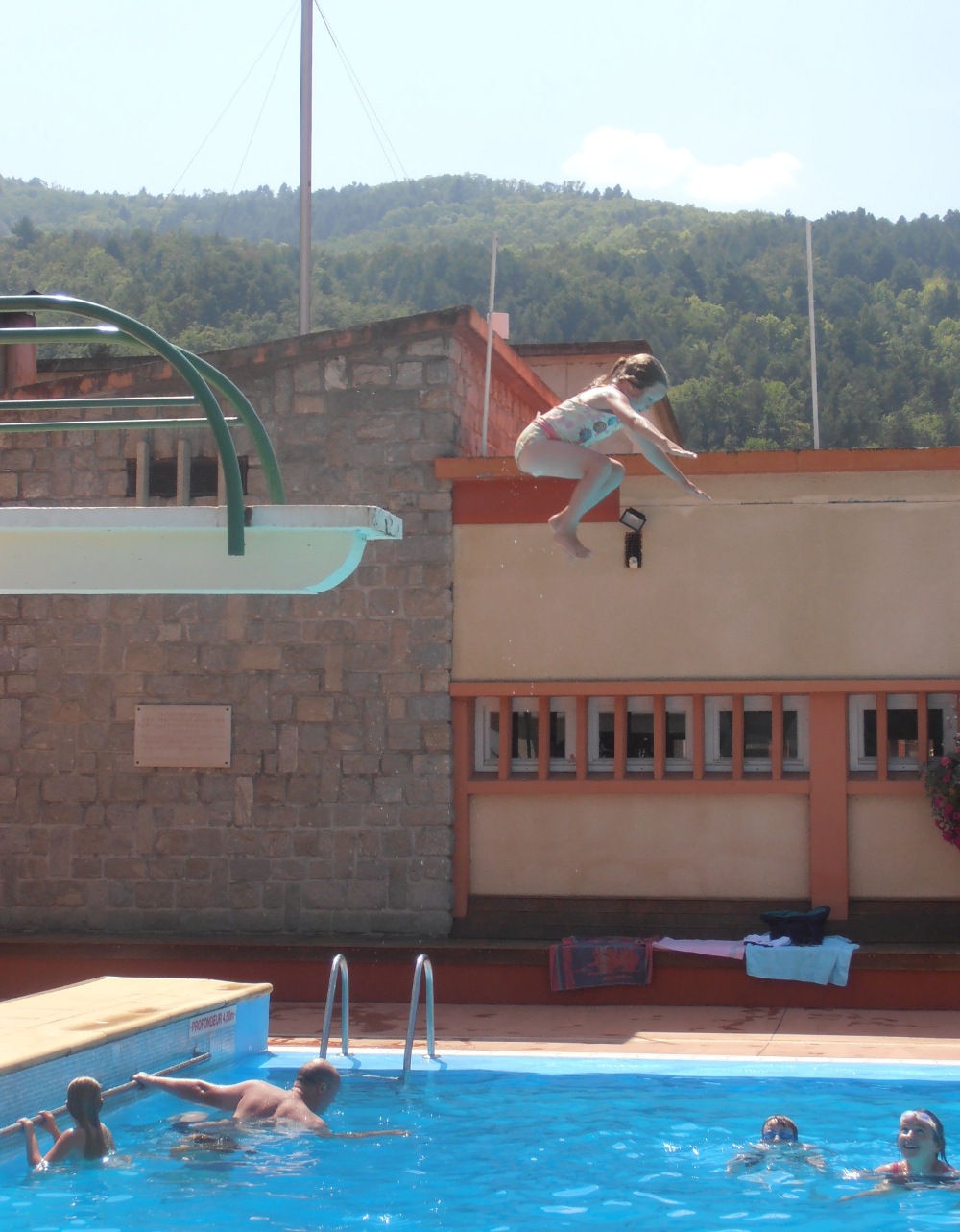
Ivy jumping in
Guardian swimming blog – How to overcome your fear of swimming
I am excited because The Guardian have published my article about fear of the water on their swimming blog. Thank you to my students who gave me permission to use their stories.

Photo by Mark Tipple
Swimming monkeys
Interesting to see that the chimpanzees here swim with their faces both in and out of the water. I find with many people I teach that it is the fear or reluctance to put the face in the water that stops them from swimming efficiently and effectively.
Learning to let go
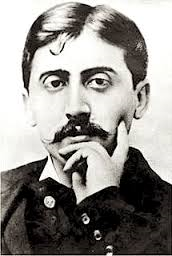 ‘People wish to learn to swim and at the same keep one foot on the ground.’
From A la Recherche du Temps Perdu by Marcel Proust 1871 – 1922
In this quotation Proust is talking metaphorically but the more I teach swimming the more I understand that letting go and trusting the water is the most important aspect of learning to swim. However it is probably also the most difficult thing to learn. It is certainly the most difficult thing to teach because it has to come from inside. It takes experience and understanding of the body in the water to be able to allow oneself to float and glide freely. You have to let the water support you, if you try to hold on to the water, even a little bit, it won’t work. And this I have realised is the biggest difference between a swimmer and a non-swimmer. A swimmer knows, instinctively and through practice, how to let the water support them, a non-swimmer doesn’t. Fear makes us try to hold on, and so fear of the water can stop someone being able to swim, even if, as is sometimes the case, they understand the technique perfectly.
 mindful swimming