
I can usually tell whether my swimming pupils are left or right handed. It is almost always the non-dominant side that seems most relaxed and natural. When I show learners new or slightly altered movements it is usually the non-dominant side that performs the movements more naturally. I have not looked into the science behind this but I am guessing it is because the conscious thoughts are less involved in the non-dominant side.
Aquaphobia
Many of my adult learners are frightened of the water that and some even describe themselves as aquaphobic. I have taught one lady who had never been in a swimming pool before, another one had never been in water deeper than her waist. A fright in childhood is very common, some have even come close to drowning.
It seemed to me that these experiences are hard wired into us and that no amount of rational thought can release us from a terror that may have been planted years and years earlier. It is only by re-experiencing the water as non-threatening, that the fears begin to float away.
Fear of water is complicated because on the one hand it is sensible. Water can be dangerous on the other hand we see people happily swimming up and down in the pool, chatting to one another, and it doesn’t look dangerous at all. On the whole, a swimming pool, should not be a dangerous place, yet there are life guards there ready to jump in and save us from death by drowning! Quite scary.
The other irony is that in water it is the fear itself that is most likely to kill us. In order to swim you have to relax and surrender yourself to the water. You can not swim with a tense rigid body. In the warm safe environment of a swimmng pool, it is mainly the thrashing around caused by panic and fear that could result in drowning.
I always say to my pupils,
‘You don’t have to hold on to the water, it is holding on to you. ‘
People often say to me
‘I can’t float.’
But this is almost non-sensical. It’s like saying
‘I can’t obey the laws of gravity.’
Floating is not something you do, it is something that happens to you.
Swimming into space
All NASA astronauts must be able to swim three lengths of a 25 metre pool without stopping, wearing a flight suit and tennis shoes. They must also be able to tread water continuously for ten minutes.
Swimming Studies by Leanne Shapton
Another swimming book. I have read this one and I loved it. It is part diary, part memoir, part notebook. Shapton includes her own paintings and photos of some of her collection of vintage swimming costumes. A Canadian she trained for the Olympic trials but gave up competetive swimming soon afterwards and became an author and an artist. Her stroke when she was competing was breaststroke.
Vintage style swimming costumes
Not that mindful, but I love these swimming costumes designed by Swimming Star Esther Williams (The Million Dollar Mermaid). Born in USA in 1921, Williams was a competetive swimmer but was unable to compete in the Olympics because of the outbreak of the second world war. Instead she starred in Billy Rose’s Aquacade a music dance and swimming show. The show was spotted by MGM and gave rise to a series of Aquamusicals featuring synchronised swimming and diving.
Williams went on to become one of MGM’s top female box office stars ever. She retired from films in the early sixities and amongst other activities she now designs beautiful, retro swimsuits. I definitely want one (at least).

Pondlife: A swimmers Journal by Al Alvarez
Writer Al Alvarez, perhaps best known for his study of suicied The Savage God, which I remember reading at age 19 or 20, has just published a book about his regular swims at Hampstead Heath Ponds. I haven’t read it yet but will.
The swimmer’s ponds at Hampstead Heath are beautiful oases of calm, surrounded by nature. I have been swimming at Hampstead Ladies Pond a few times, so far only in summer. I have found that trips there always add up to more than the sum of their parts. It is a magical place, recently saved from closure.
The last time I went I had a long conversation with a lady, well in her seventies who was sitting on the changing room, completley naked, apart from her pants which were neither up nor down, but were at sort of half mast, just above her ankles. This (and the fact that she told me she swims there even in the cold weather) was the only sign that she was perhaps just a little bit eccentric.
Pondlife: A swimmer’s journal by Al Alvarez, is published by Bloomsbury £14.99
Wild swimming
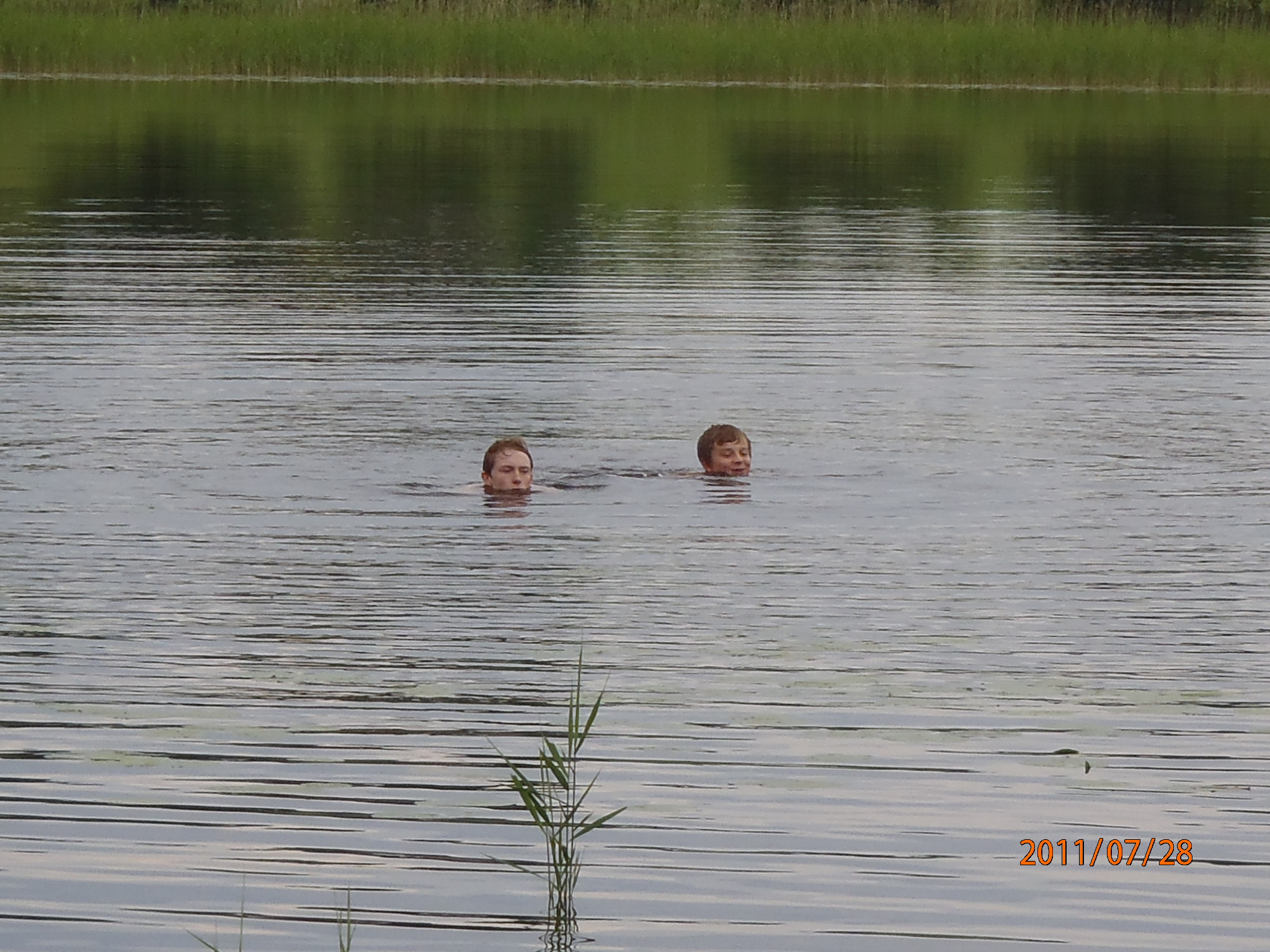
There has been a surge in popularity in what is referred to as ‘wild swimming’. You could say this is what we used to just call ‘swimming’. Wild swimming just means swimming outdoors but not in a swimming pool.
The Outdoor Swimming Society is a great source of information and contacts for anyone interested in wild swimming in the UK.
Annette Kellerman 1886 – 1975
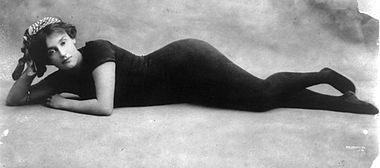 Annette Kellerman was a professional swimmer, writer and film actress. She designed the first one piece swimming costume for women. It was considered scandalous by some. Before Kellerman’s one piece women wore cumbersome pantaloons to swim and bathe.
Men who swim: Swedish synchronised swimmers
I first learned about these Swedish male synchronised swimmers through the Storyville documentary Sync or Swim. Film maker Dylan Williams got together a group of more or less ordinary, unglamourous middle aged men, formed a team, found a teacher and trained in this sport that is usually practised only by women. The formed the Stockholm Gents Synchronised Swimming Team and much to their surprise ended up as world champions, partly because there was so little competition!
They have since been campaigning to have synchronised swimming for men included as an Olympic Sport.
o
Aquadettes show it’s never too late
These swimmers have found freedom in the water.
 mindful swimming